By Tere Siqueira
Protests over immigration enforcement in Minnesota have entered a third week, sparking growing concerns across Midwestern states, including Kansas.
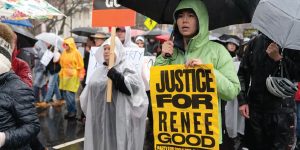
The protests resulted from the fatal, widely reported shooting on Jan. 7 of U.S. citizen Renee Good by a U.S. Immigration and Customs Enforcement (ICE) agent. According to “PBS NewsHour,” the Department of Justice (DOJ) has announced it’ll pursue charges against protesters, but it won’t investigate the shooting, prompting scrutiny from civil rights advocates into the matter.
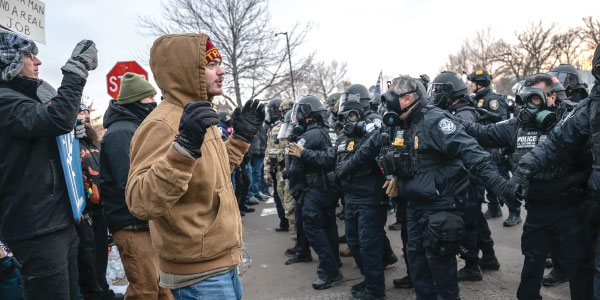
As “PBS NewsHour” reported, the protests have led to mounting clashes between demonstrators and more than 2,000 federal officers deployed in Minnesota. The news program also reported that the Department of Homeland Security has claimed to have made 3,000-plus arrests in recent weeks, but stated that total had not been confirmed.
According to the digital publication POLITICO, President Trump is threatening to invoke the Insurrection Act and has ordered 1,500 active-duty troops in Alaska to prepare for deployment because of the growing tensions.
Minneapolis Mayor Jacob Frey and Minnesota Gov. Tim Walz have publicly criticized the presence of federal agents in their state. Per reports by CBS News and other news outlets, their comments have led to them being investigated by the Justice Department, along with other government officials.
In other DOJ-related news, the agency has reportedly opted to investigate an anti-ICE protest that took place Sunday (Jan. 18) and disrupted a Cities Church service in St. Paul. As ABC News and other media outlets reported, protesters claimed that David Easterwood, a Cities Church pastor, also is an ICE official – a claim that remains unconfirmed by federal authorities.
Those who attended the church protest included former CNN anchor Don Lemon, who streamed interviews with attendees.
As stated by USA Today, the DOJ is considering whether the protest violated the FACE Act, which prohibits obstructing access to places of worship. The St. Paul Police Department also is investigating the incident on the grounds of disorderly conduct.
Even though the protests are centered in Minnesota, immigrant communities in Kansas and Missouri are expressing concern over the broader implications. Organizations supporting immigrant rights in the region are calling for transparency, oversight and greater dialogue between federal agencies and local governments. Advocates warn that increasing militarization in immigration enforcement might discourage community trust in public institutions.
To prevent reactivity and promote civic engagement, experts suggest several steps residents can take. They include staying informed through reputable sources, participating in peaceful local forums or vigils and contacting elected officials to express concerns.
Legal clinics and community organizations across Kansas are advising residents to know their rights during encounters with law enforcement and to seek verified legal counsel when needed.
Aumentan las tensiones por protestas contra ICE en Minnesota
Las protestas por la aplicación de leyes migratorias en Minnesota han entrado en su tercera semana, generando creciente preocupación en varios estados del Medio Oeste, incluido Kansas.
Las manifestaciones surgieron tras el asesinato, ampliamente reportado, de Renee Good, ciudadana estadounidense, el 7 de enero a manos de un agente del Servicio de Control de Inmigración y Aduanas (ICE, por sus siglas en inglés). Según PBS NewsHour, el Departamento de Justicia (DOJ) anunció que presentará cargos contra los manifestantes, pero no investigará el tiroteo, lo que ha despertado críticas por parte de defensores de los derechos civiles.
Como también reportó PBS NewsHour, las protestas han provocado enfrentamientos crecientes entre manifestantes y más de 2,000 agentes federales desplegados en Minnesota. El programa informativo también señaló que el Departamento de Seguridad Nacional (DHS) afirmó haber realizado más de 3,000 arrestos en las últimas semanas, aunque esa cifra no ha sido confirmada.
De acuerdo con la publicación digital POLITICO, el presidente Trump ha amenazado con invocar la Ley de Insurrección y ordenó a 1,500 tropas en servicio activo en Alaska prepararse para un posible despliegue debido al aumento de las tensiones.
El alcalde de Minneapolis, Jacob Frey, y el gobernador de Minnesota, Tim Walz, han criticado públicamente la presencia de agentes federales en su estado. Según informes de CBS News y otros medios, sus declaraciones han provocado que el Departamento de Justicia los investigue, junto con otros funcionarios públicos.
En otro asunto relacionado con el DOJ, se reportó que la agencia ha decidido investigar una protesta contra ICE que interrumpió un servicio religioso en Cities Church, en St. Paul, el domingo 18 de enero. Como informaron ABC News y otros medios, los manifestantes aseguraron que David Easterwood, pastor de esa iglesia, también trabaja como agente de ICE. una afirmación que no ha sido confirmada por autoridades federales.
Entre los asistentes a esa protesta se encontraba el ex presentador de CNN Don Lemon, quien transmitió entrevistas en vivo con los participantes.
De acuerdo con USA Today, el DOJ está considerando si dicha protesta violó la Ley FACE, que prohíbe obstruir el acceso a lugares de culto. El Departamento de Policía de St. Paul también está investigando el incidente por conducta desordenada.
Aunque las protestas se concentran en Minnesota, las comunidades inmigrantes en Kansas y Missouri han manifestado preocupación por sus posibles implicaciones. Organizaciones que apoyan los derechos de los inmigrantes en la región piden mayor transparencia, supervisión y diálogo entre las agencias federales y los gobiernos locales. Defensores advierten que una mayor militarización en la aplicación de leyes migratorias podría debilitar la confianza comunitaria en las instituciones públicas.
Para evitar respuestas reactivas y fomentar la participación cívica, expertos recomiendan tomar varias medidas: mantenerse informado a través de fuentes confiables, participar en foros o vigilias locales pacíficas, y contactar a representantes electos para expresar inquietudes.
Clínicas legales y organizaciones comunitarias en Kansas también aconsejan a los residentes conocer sus derechos durante interacciones con las autoridades y buscar asesoría legal verificada en caso necesario.