By Tere Siqueira
In Sue Moreno’s childhood home, creating art and fashion was a necessity.
There wasn’t much money, Moreno recalled, so her mother made what the family needed: bright, colorful clothes for the children; papier-mâché pinatas (piñatas in Spanish) for celebrations.
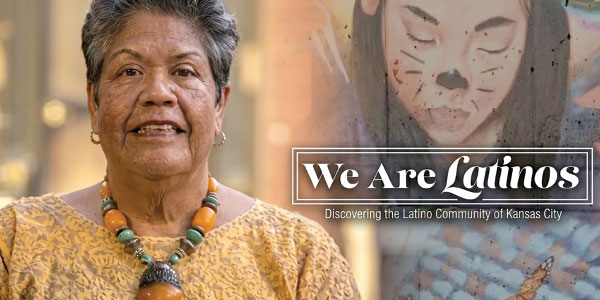
More than 50 years later, Moreno’s story is part of “We Are Latinos,” the Kansas City PBS documentary series about the Greater Kansas City area’s Latino community. Moreno, an artist and a retired art teacher, is among the subjects of its latest episode, which has a public screening and discussion scheduled for Oct. 22 at the Boulevard Drive-In Theatre in Kansas City, Kansas.
Filmmaker Victor Antillanca contacted Moreno about sharing her story. For Moreno, saying yes was about more than telling her own story.
“I got to share with young girls and young people that you can be anything you want,” she said. “You just have to keep doing, be diligent about it, and be consistent and persistent in believing that … your artwork matters.”
Moreno’s journey to becoming what she wanted started in Davenport, Iowa, in a family whose grandparents had worked as migrant laborers. It continued at the University of Iowa. In 1975, when she arrived on campus to continue her education through the help of a diversity and affirmative action program, she was among about only 10 Hispanic students there, she recalled.
From there, Moreo brought art to Kansas City classrooms. For more than three decades, she taught in the Kansas City, Missouri, School District (now called Kansas City Public Schools), sharing her talents with African American, Chicano, Latino and other students.
Growing up Hispanic and lesbian, Moreno often wondered if she should hide or pretend to be someone she wasn’t, she recalled. Support from her parents helped give her the confidence to be herself. She carries that confidence today as a Latina and an artist, she said.
“I’m not afraid anymore to be vulnerable and let myself be who I authentically am, because not everybody’s gonna like it or accept it,” Moreno said. “But as long as I have the love of my family and my community, that’s all that matters to me.”
Seeing Moreno’s life’s story and identity captured by Antillanca’s camera, after years of telling stories through her art, brought her to tears, she said. It reminded her that most limits exist only in our own minds.
That’s also what Moreno hopes viewers take from the series, she said.
Moreno hopes young people take from her life’s story that they should walk with pride and courage, be brave, and surround themselves with community and knowledge, she said. To help young people do those things, she advises parents to take them to free public events, in the Latino community and beyond, so new places feel less intimidating. She also encourages parents to give their children chances to speak up for themselves, so they learn to use their voice, including for fighting against racism or mistreatment. In addition, she urges parents to make education a priority for their children.
At a time when many in the Hispanic community are facing hard days, Moreno believes stories like hers matter more than ever. Latinos have roots in this land that go back centuries before the United States existed – and those roots aren’t going anywhere, she said.
To watch “We Are Latinos” for free online, visit kansascitypbs.org/wearelatinos. The series also is available on the PBS app.
Serie documental cuenta la historia de arte, orgullo y autenticidad de Sue Moreno
En la casa donde creció Sue Moreno, el arte y la costura no eran un pasatiempo, sino una necesidad.
El dinero no alcanzaba para mucho, recordó Moreno, así que su mamá hacía con sus propias manos lo que la familia necesitaba: ropa de colores alegres para los niños y piñatas de papel maché para cada celebración.
Más de medio siglo después, esa historia llega a la pantalla en “We Are Latinos” (“Somos latinos”), la serie documental de Kansas City PBS dedicada a la comunidad latina del área metropolitana. Moreno, artista y maestra de arte jubilada, es una de las protagonistas del episodio más reciente, que se proyectará al público, seguido de una charla, el 22 de oct. en el Boulevard Drive-In Theatre de Kansas City, Kansas.
Fue el cineasta Victor Antillanca quien la buscó para compartir su historia. Para Moreno, decir que sí iba mucho más allá de hablar de sí misma.
“Tuve la oportunidad de decirles a las niñas y a los jóvenes que pueden llegar a ser lo que quieran”, expresó. “Solo hay que seguir adelante, ser constantes, no rendirse y creer que… su arte vale”.
Su camino empezó en Davenport, Iowa, en una familia que salió adelante a base de trabajo. Sus abuelos fueron trabajadores agrícolas migrantes. En 1975 llegó a la Universidad de Iowa gracias a un programa de diversidad y acción afirmativa (affirmative action), y recuerda que entonces apenas había unos 10 estudiantes hispanos en todo el campus.
De ahí se llevó el arte a los salones de Kansas City. Por más de 30 años dio clases en el distrito escolar de Kansas City, Missouri (hoy Kansas City Public Schools), donde compartió su talento con alumnos afroamericanos, chicanos, latinos y de muchos otros orígenes.
Crecer siendo hispana y lesbiana no fue fácil. Muchas veces, contó, se preguntó si debía esconderse o aparentar ser alguien más. El apoyo de sus papás le dio la seguridad para ser ella misma, una seguridad que hoy la acompaña como latina y como artista.
“Ya no me da miedo mostrarme vulnerable y ser quien realmente soy, porque no a todo el mundo le va a gustar ni lo va a aceptar”, manifestó. “Pero mientras tenga el cariño de mi familia y de mi comunidad, no necesito nada más”.
Después de tantos años contando historias a través de su arte, verse en la cámara de Antillanca la hizo llorar. Le recordó que la mayoría de los límites solo existen en nuestra cabeza.
Ese es justo el mensaje que espera que el público se lleve de la serie.
A los jóvenes les pide que caminen con orgullo y valentía, sin miedo, y que se rodeen de comunidad y de conocimiento. Y a los padres les da consejos concretos para ayudarlos: llevar a sus hijos a eventos públicos gratuitos, dentro y fuera de la comunidad latina, para que se sientan cómodos en lugares nuevos; darles oportunidades de expresarse para que aprendan a alzar la voz, también frente al racismo o el maltrato; y, sobre todo, hacer de la educación una prioridad.
En tiempos difíciles para muchas familias hispanas, Moreno está convencida de que historias como la suya importan hoy más que nunca. Los latinos tienen raíces en esta tierra desde siglos antes de que existiera Estados Unidos, recordó, y esas raíces no van a desaparecer.
Para ver “We Are Latinos” gratis en línea, visite kansascitypbs.org/wearelatinos. La serie también está disponible en la app de PBS.